How to Find the Cause of Messy Books and Clean Them Up in Mesa

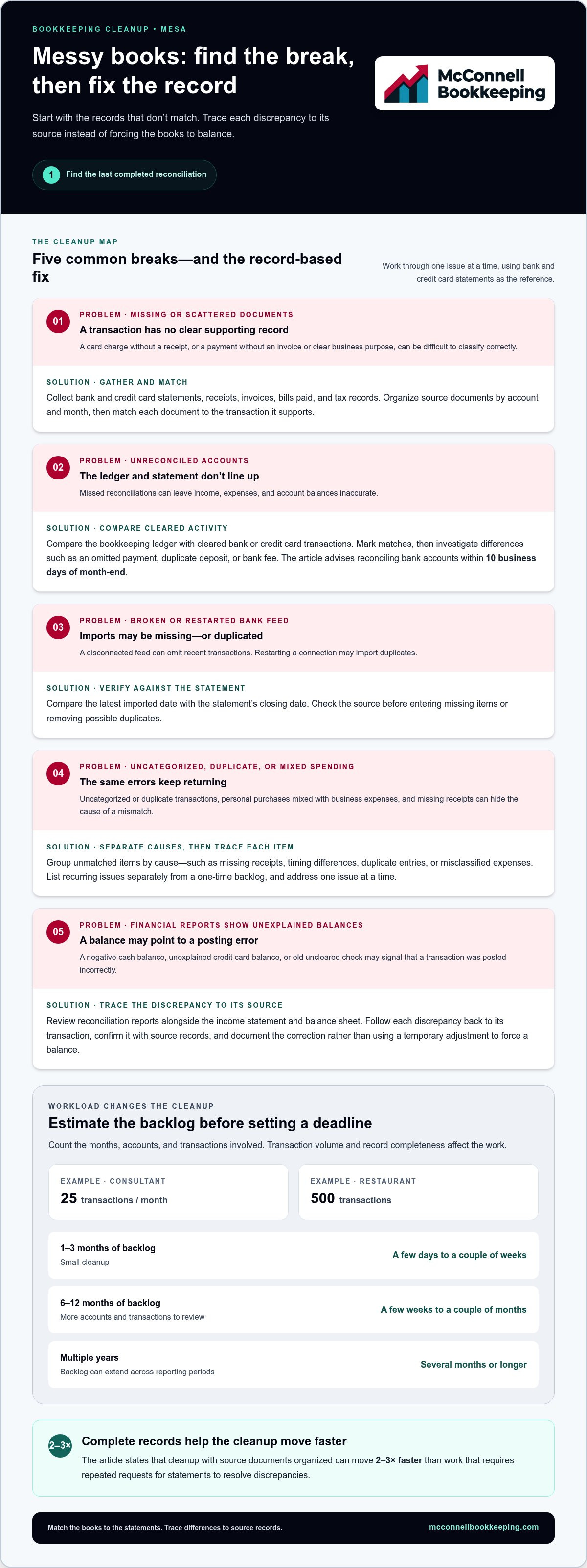
Messy books are often a process problem, not a math problem. They commonly begin with missed bank reconciliations, mixed personal and business spending, or transactions left uncategorized. To fix your messy books in Mesa, start by comparing recorded activity with bank and credit card statements, then work through discrepancies in order. A small cleanup covering 1 to 3 months of backlog may take a few days to a couple of weeks; larger backlogs can take weeks or months.
If you’re searching for how to fix my messy books Mesa, start by identifying whether the issue is a missing document, an unreconciled account, or a bookkeeping habit that keeps causing errors. A focused review can show where the records stop matching and help you choose a practical first step.
This guide explains why small-business books become disorganized, what to review first, and which records can help pinpoint the cause. You’ll also learn how to sort invoices, expenses, assets, and inventory, what affects cleanup time, and when bookkeeping support can help restore reliable financial reports.
Table of Contents
How long does a bookkeeping cleanup project typically take?
A bookkeeping cleanup can take a few weeks or a few months, depending on the backlog, transaction volume, and record completeness. A small cleanup covering 1 to 3 months may take a few days to a couple of weeks; multiple years can take several months or longer.
Estimate the backlog before setting a deadline. List the months needing attention, then count the accounts and transactions involved. A cleanup covering 6 to 12 months may take a few weeks to a couple of months. A consultant with 25 transactions a month may need less sorting than a restaurant handling 500 transactions. Missing statements and receipts can extend the work because each discrepancy needs supporting records.
Identify what caused the books to fall behind. Look for unreconciled accounts, uncategorized or duplicate transactions, personal purchases mixed with business expenses, and missing receipts. For example, a payment may appear in the bank feed without an invoice or clear business purpose. List recurring issues separately to distinguish a one-time backlog from a process problem that could create new errors during cleanup.
Watch for signs that workload is affecting bookkeeping accuracy. Repeated corrections, overdue reconciliations, growing lists of uncategorized transactions, and missed handoffs can signal that bookkeeping tasks are falling behind. Note whether the same errors return after review or routine reports are delayed. Assign clear responsibility for recordkeeping tasks and address one issue at a time, rather than expecting one person to repair every process at once.
Choose support based on the work required. A bookkeeper can help with transaction records, reconciliations, and cleanup; a CPA may be appropriate when tax reporting or complex accounting judgments are central. An accounting firm can coordinate bookkeeping and accounting when both are needed. If you want to fix messy books in Mesa, first define the backlog and desired outcome, then match the work to the right professional.
Protect filing deadlines while cleanup proceeds. According to the Internal Revenue Service, the failure-to-file penalty is 5% of unpaid tax, up to a maximum of 25%. The Internal Revenue Service states that the maximum is 25% of unpaid tax. This penalty concerns tax filing, not the time needed to correct bookkeeping. Arizona or Mesa tax records may involve state or local filing obligations, so separate record correction from meeting applicable filing requirements.
Assess credentials, reviews, and data handling before sharing records. Review a Mesa bookkeeper’s stated qualifications and relevant experience, then look for specific, consistent feedback about reconciliations and cleanup. Ask how access to accounting software and bank statements is controlled, who can view files, and how documents are transferred. Clear answers help you assess practical safeguards without confusing bookkeeping qualifications with CPA qualifications.
How Does a Small Business End Up With Messy Books?
Filing with unreconciled books can leave income, expenses, and account balances inaccurate. A return based on those records may misstate taxable activity, lack supporting documents, or need correction later.
Gather source documents by account and month. Collect bank and credit card statements, receipts, invoices, and records of bills paid. Match each document to the account and transaction it supports. A card charge without a receipt, for example, may be difficult to classify correctly. Organizing files by month helps connect statements with source documents during review.
Reconcile each account against cleared transactions. Compare the bookkeeping ledger with the transactions that actually cleared the bank or credit card account. Mark matched entries, then investigate differences such as an omitted payment, duplicate deposit, or bank fee. Businesses are advised to reconcile bank accounts within 10 business days of month-end. Regular review helps surface errors before they accumulate across statements.
Investigate broken bank feeds instead of trusting incomplete imports. A disconnected feed can leave recent transactions missing, while a restarted connection may import duplicates. Compare the latest imported date with the statement’s closing date, then enter or remove entries only after checking the source. Business complexity also matters: a restaurant example may involve 500 transactions, compared with a consultant’s 25 transactions a month.
Review reconciliation reports and financial statements together. Confirm that each account has a completed reconciliation, then compare the income statement and balance sheet with source records. A negative cash balance, unexplained credit card balance, or old uncleared check may point to a posting error. Trace each discrepancy to its transaction and document the correction instead of using a temporary adjustment to force the balance sheet to agree.
Trace discrepancies to their documents before closing the books. Group unmatched items by cause, such as missing receipts, timing differences, duplicate entries, or misclassified business expenses. Source-document-organized cleanup can move 2-3x faster than work requiring repeated statement requests for discrepancies. If matching bank activity has become a recurring gap, monthly bank reconciliations can help keep account records aligned with cleared transactions.
What's the First Thing I Should Do to Clean Up My Books?
Define which records and dates need attention, then gather documents before changing entries. A clear scope helps you correct older bookkeeping without introducing errors into current records.
Set the Cleanup Period and ScopeChoose the first month requiring review, then identify the last month with reliable records. According to the Internal Revenue Service, the IRS can generally look back three years. Treat that as useful context, not an automatic cleanup boundary: prioritize the current tax year and any years with unfiled returns. Include earlier periods when unresolved balances or transactions affect the records you need to correct.List every bank account, credit card, and bookkeeping period involved. A business behind for one month has a different workload from one with multiple years of incomplete records. Transaction volume matters too: a consultant processing 25 transactions a month has fewer entries to review than a restaurant processing 500. Note missing statements, unreconciled months, and reporting deadlines before setting the project’s scope.
Gather Required DocumentsGather accounting-software access, bank and credit card statements, receipts, invoices, and relevant tax records. Organize files by account and month, then compare their date ranges with the cleanup period. A bank statement covering a month with no matching ledger activity, for example, signals a gap to investigate.Include customer payment records, unpaid bills, owner contributions, and business purchase documents. They can help distinguish an unpaid invoice from a missing deposit or personal transaction. Note questions beside the relevant entry instead of guessing its purpose. Include any relevant records held by a tax preparer so the cleanup is based on consistent information.
Categorize Transactions and Clean Up EquityReview uncategorized transactions one by one and assign a category supported by a receipt, invoice, or statement. Don’t label every unclear purchase as a business expense. A personal purchase from a business account, for example, must be distinguished from an ordinary business expense and recorded consistently with the owner’s records.Next, examine owner contributions, withdrawals, and opening balances. Trace each amount to source records before changing equity entries; a balancing adjustment can hide a missing transaction rather than correct it. Note recurring errors, such as customer deposits recorded as income twice, then confirm corrected entries flow through account balances and reports. This sequence makes cleanup more reliable and helps prevent the same categorization problems from returning.
Addressing embarrassment about disorganized books
Describe the records as they are, not as you wish they were. Write down the actual issues: missing receipts, unreconciled accounts, uncategorized transactions, or reports you haven’t reviewed. For example, “QuickBooks includes transactions through March, but April’s bank statement is missing” gives you a clear starting point. A specific description turns concern into a practical bookkeeping task.
Gather what you have before trying to make it look complete. Put bank statements, invoices, receipts, and software reports in one working folder. Keep incomplete months visible instead of filling gaps with guesses. If you have a tax return but not its supporting records, include the return and note what is missing. An honest inventory shows what can be matched and what still needs investigation.
Share the context behind unusual transactions. Add a short note beside a personal purchase made from a business account, a customer payment with no invoice, or a deposit that appears twice. The context helps explain the transaction without changing the original record. If you’re unsure, mark it for review rather than forcing it into an expense category. Clear notes reduce repeat questions during cleanup.
Separate cleanup questions from personal judgment. A missing receipt is a document gap, not a verdict on your ability to run a business. Focus on what can be addressed: locating the bank statement, matching a deposit to an invoice, or identifying an entry in QuickBooks. This makes it easier to discuss the work plainly and focus on accurate records and useful reports.
Set a manageable review routine while older records are addressed. Choose one recurring task, such as saving receipts or reviewing uncategorized entries, and schedule it. For example, file each week’s business expenses in the same software folder. A repeatable habit supports ongoing bookkeeping and helps prevent another backlog while older transactions are being reviewed.
Prepare a concise handoff for anyone helping with the records. State which accounts and months need attention, where the bank statements are stored, and what questions remain. Include relevant tax records and reports when they clarify past entries. You don’t need to solve every discrepancy before sharing the file. A clear handoff gives the review evidence, priorities, and specific questions to work from.
Checking invoices, expenses, assets, and inventory
Review supporting records alongside ledger entries, rather than treating paperwork as a separate task. Checking each invoice, expense, asset, or inventory adjustment helps explain both the balance and the activity behind it.
Match invoices to customer payments. For each invoice, compare its date, amount, customer, and payment record. If an invoice remains open but a deposit appears in the bank, trace it to that customer before marking the balance paid. Keep unpaid bills together, then file each in the relevant monthly folder after payment. This creates a clear timeline of what was owed, paid, or still outstanding.
Review expenses against receipts and account activity. Match each business purchase to a receipt, invoice, or card statement, then record its purpose. If a card is used for both personal and business spending, separate transactions using supporting documents instead of treating the full statement as business expenses. A hardware-store receipt may support supplies, while a personal grocery purchase needs separate treatment. Flag unclear entries for follow-up rather than guessing at a category.
Check asset entries against purchase records. Compare equipment or vehicle entries with invoices, payment records, and the date the item entered business use. A laptop recorded as both an expense and an asset can distort reports and account balances. Trace the original transaction before changing its classification, and keep the supporting document with the entry. If an item was sold or disposed of, note the transaction and related record for review.
Compare inventory records with what the business can account for. Use purchase invoices, sales records, and available stock counts to investigate differences. If the inventory list shows a product that is no longer on the shelves, check whether it was sold, returned, damaged, or recorded incorrectly. Note the reason and supporting document for each adjustment. Consistent records help explain changes in inventory balances instead of leaving unexplained differences.
Reconcile corrections before relying on reports. After matching documents and resolving entries, confirm affected accounts are reconciled and updated balances agree with supporting records. Compare the revised report with the previous version, noting which invoices, expenses, assets, or inventory entries changed. This helps catch a correction posted twice or to the wrong period. A clear timeline also supports accurate recordkeeping going forward.
If matching documents and balances has become difficult to manage, get help with books cleanup and bring the records into a more usable order.
McConnell Bookkeeping: Monthly Bank Reconciliations
McConnell Bookkeeping can help restore order through Books Cleanup and Monthly Bank Reconciliations. When bank activity no longer matches the books, reconciliation traces differences against cleared transactions and supports accurate account balances. Once records are organized, Financial Statement Preparation can give you clearer reports to use in business decisions. Accounts Receivable Management can also help track customer invoices and payments.
Turn to bookkeeping support when unreconciled accounts, missing entries, or recurring errors make it hard to rely on your financial records. Bringing together available statements and transaction documents gives cleanup a practical starting point and clarifies which records need attention.
To discuss bookkeeping support, contact McConnell Bookkeeping.
Build a Clearer Financial Picture From Here
Accurate books provide a stronger foundation for decisions about hiring, spending, and growth. If you’re working to fix your messy books in Mesa, make the next step a lasting one: use reliable records to guide today’s decisions and build habits that keep your finances organized.
McConnell Bookkeeping provides Book Clean-up to organize records, Monthly Bookkeeping with bank reconciliations to keep account activity aligned, and Financial Analysis to make business performance easier to review. This support helps you move from correcting past entries to building a clearer, more useful financial picture.
Contact McConnell Bookkeeping today to discuss the bookkeeping support that fits your needs. A thoughtful next step can make financial clarity feel more attainable.
Frequently Asked Questions
What If I’m Embarrassed That My Books Are a Mess?
Describe the bookkeeping situation plainly and focus on the outcome you need, not on blame. You might say, “I need help understanding which reports I can rely on before making a hiring decision.” That gives the review a clear purpose. Write down questions in advance, such as whether an unusual owner transfer affects reported cash, to keep the discussion practical and specific.
#4 - How much to charge for clean-up?
Cleanup pricing depends on the records and scope of work, and a quote request is needed to determine the price. Factors include the number of months involved, transaction volume, number of accounts, and completeness of source records. A single account with orderly records, for example, presents a different workload from several accounts with missing statements and unresolved entries.
#5 - What documents do you need for a clean-up?
Useful cleanup records include accounting-software access, bank and credit card statements, sales invoices, receipts, and prior financial reports. Include loan statements or equipment purchase records if those balances appear in the books. A lender statement, for example, can help explain how a payment was recorded. Sort records by account and date range to make review easier.
What do I need to provide?
Provide access to your accounting file and records that explain business activity, along with a brief note about what you want resolved. Mention changes such as switching bank accounts, changing invoicing practices, or pausing bookkeeping. If your Mesa business recently changed software, identify where the earlier records are kept. This context helps distinguish a transition gap from an entry error.
What's the Simplest Way to Organize My Small Business Bookkeeping?
Use a consistent naming system that makes each document easy to find, such as “vendor name, invoice date, purpose.” Apply the same format to digital receipts and invoices, and keep a short file of notes about unusual transactions. Label a transfer between business accounts as an internal transfer, for example. Consistent labels reduce ambiguity when you review a report or transaction later.
How much does messy-books cleanup cost in Mesa?
The price for cleanup in Mesa depends on the scope and is provided after a quote request. Key factors include how long the backlog spans, transaction volume, number of accounts, and completeness of supporting documents. A clear transaction trail calls for a different review from one with missing statements or unresolved balances. Gathering available records helps define the work involved.
What documents should I gather before a bookkeeping cleanup?
Alongside transaction records, gather documents that explain carried-forward balances, such as loan agreements, equipment purchase paperwork, and prior financial statements. If your business uses a point-of-sale system, include sales summaries so deposits can be compared with reported sales. For a Mesa retailer, comparing daily sales summaries with bank deposits can help identify timing differences or missing entries.
What steps are involved in cleaning up overdue or inaccurate books?
Cleanup begins by identifying the affected periods and accounts, then reviewing transactions against supporting records. The next step is to resolve missing, duplicated, or misclassified entries and check how corrections affect reports. Keep a change log with the date, account, and reason for each adjustment. This gives you a clear record to follow when reviewing future reports or explaining a balance.


Comments